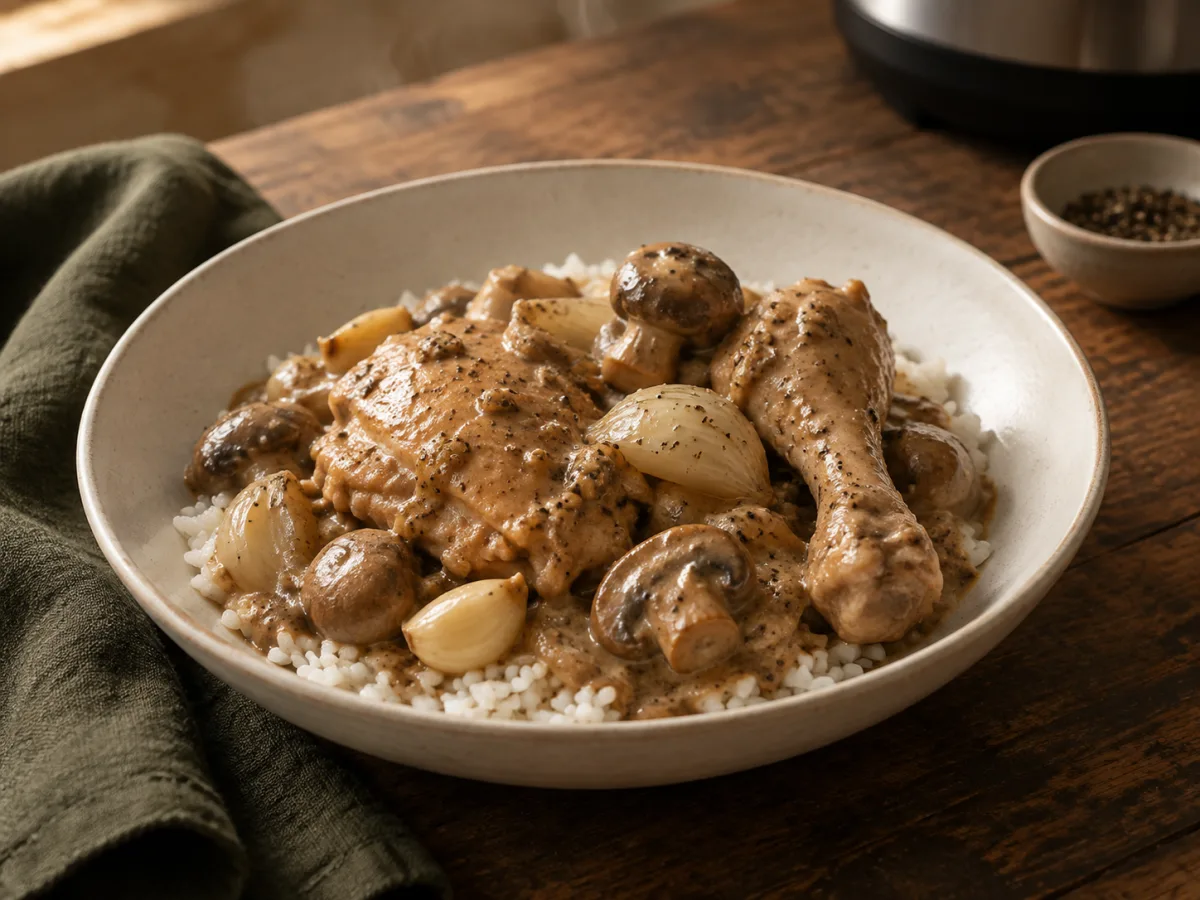
Creamy Garlic Mushroom Chicken
The creamy garlic pepper method on chicken thighs. Much faster than the beef, much cheaper, same finish.
6 servings. Read PREREAD.md first for cooker operation, salt calibration, and the cooling routine.
Read the timing section below before cooking. Chicken is far less forgiving than beef and the times are not interchangeable.
Ingredients
For the pressure cook
- 1.2 kg bone-in chicken thighs or drumsticks, skin removed (bone weight is why this is more than the beef’s 1 kg)
- 3/4 cup gelled chicken stock — use
chicken-stock.mdif available; water works but gives a thinner, flatter sauce - 5 tbsp Datu Puti soy sauce
- 2 tbsp oyster sauce
- 3 tsp coarsely crushed black peppercorns
- 4 small red onions, quartered
- 15–20 garlic cloves, peeled but left whole
To finish, off heat - 2 x 400 g cans whole button mushrooms, drained and rinsed
- 2 tbsp butter
- 150–250 ml all-purpose cream, added gradually
Timing — the part that matters
Beef chuck has a huge tender window: 30, 40, even 45 minutes all land somewhere edible. Chicken has no such window. It goes from underdone to falling apart in a few minutes, so you can’t bias long and walk away the way you can with beef.
Natural release complicates it further, since 20–25 minutes of residual heat is a lot of cooking for something as small as a thigh. So cook short and let the release finish the job:
8 minutes at pressure, then full natural release. Drop to 7 minutes if you want the pieces to stay intact — at this batch size the release is long enough to push 8 minutes toward falling off the bone. Either is fine to eat; it’s a texture preference.
Two hard rules:
- No breast meat. Under pressure with a long natural release it turns chalky and dry, and unlike thighs there’s no graceful failure mode. Overshot thighs just shred, which is fine.
- Skin off. Unbrowned skin under pressure comes out pale and flabby, and it’s where most of the rendered fat comes from. It’s the single most off-putting thing you could put in the pot.
Method
- Liquids first. Stock, soy sauce, oyster sauce, and crushed pepper into the pot. Stir once.
- Solids on top. Chicken, quartered onions, whole garlic cloves. Do not stir again.
- Lid on, valve seated. Poultry or Meat/Stew, then Pressure Time to 8 minutes (7 for intact pieces).
- Window cracked, fan pointing out, leave the room.
- Let pressure drop fully on its own. Here the release is part of the cooking, not just a smell measure. Turn Keep Warm off the moment it drops — residual heat keeps cooking chicken. Check the thickest piece away from the bone reaches 74°C; if not, return it to Sauté until it does.
- Lift the chicken out, then reduce the liquid. Expect this soupier than the beef; chicken releases a lot of water. Lifting it out first matters more here than with beef, because cooked thighs shred when you stir around them.
- Butter and mushrooms in, stirred until warmed through. Return the chicken.
- Sauté off. Cream in last, gradually, to taste.
Total elapsed is roughly 55 minutes: ~20–25 to reach pressure, 8 cooking, ~20–25 releasing.
Using thigh fillet instead of bone-in
A reasonable swap, and arguably the better one for meal prep — bones are annoying to eat around when you’re reheating five portions out of containers, and you get more edible meat per kilo.
What you give up is forgiveness and sauce body. The bone adds thermal mass that widens the timing window, and bone and connective tissue release gelatin that gives the sauce weight — which matters more than usual when you aren’t searing.
Three adjustments:
- 1 kg fillet instead of 1.2 kg bone-in. No bone weight to account for.
- 5 minutes instead of 8. Fillet heats faster and the long natural release adds more carryover. It will still shred slightly; thighs fail by falling apart rather than drying out.
- Expect a thinner sauce. Plan on the cornstarch slurry rather than hoping it thickens itself.
Never substitute breast fillet. It goes chalky and dry under pressure with no graceful failure mode.
Restoring the body you lost
Option 1 — scrap bones. Throw a few bony pieces (wings, or a back) in alongside the fillets and fish them out before serving. Fillet convenience in the dish, bone-derived gelatin in the sauce, for very little money. This addresses the problem most directly.
Chicken stock is the written default. Use 3/4 cup stock, never stock plus water, or you compound the excess-liquid problem. chicken-stock.md is portioned at exactly 3/4 cup a bag for this.
Note what stock actually does. Good boxed or homemade stock carries some gelatin and will add both flavour and body. A bouillon cube carries salt and glutamates but essentially no gelatin — it will taste more savoury and feel just as thin.
Watch the salt stacking. Between soy, oyster sauce, and a salted stock you can overshoot quickly. Read the label the same way you would the soy bottle. With salted stock or a cube, cut the soy by about 1 tbsp and taste at the end; with unsalted or low-sodium stock, leave the soy as written. Stock made per chicken-stock.md sits between the two — only incidentally salty from the rotisserie brine, and diluted enough that you should leave the soy alone on the first attempt.
Notes specific to this recipe
- This is the recipe most likely to need a final splash of soy. Chicken contributes a lot of its own water, so taste before serving.
- Add 2 tsp dried rosemary to the pot and this becomes rosemary cream chicken. For a fuller rosemary treatment with ginger and potatoes, see
rosemary-chicken.md. - Potatoes hold their shape here. At 8 minutes they stay as chunks rather than dissolving, which also means they won’t thicken the sauce for you the way they do in the 35-minute beef recipes.
- Cooling matters a little more with poultry than with beef. Split into two shallow containers as described in
PREREAD.md.