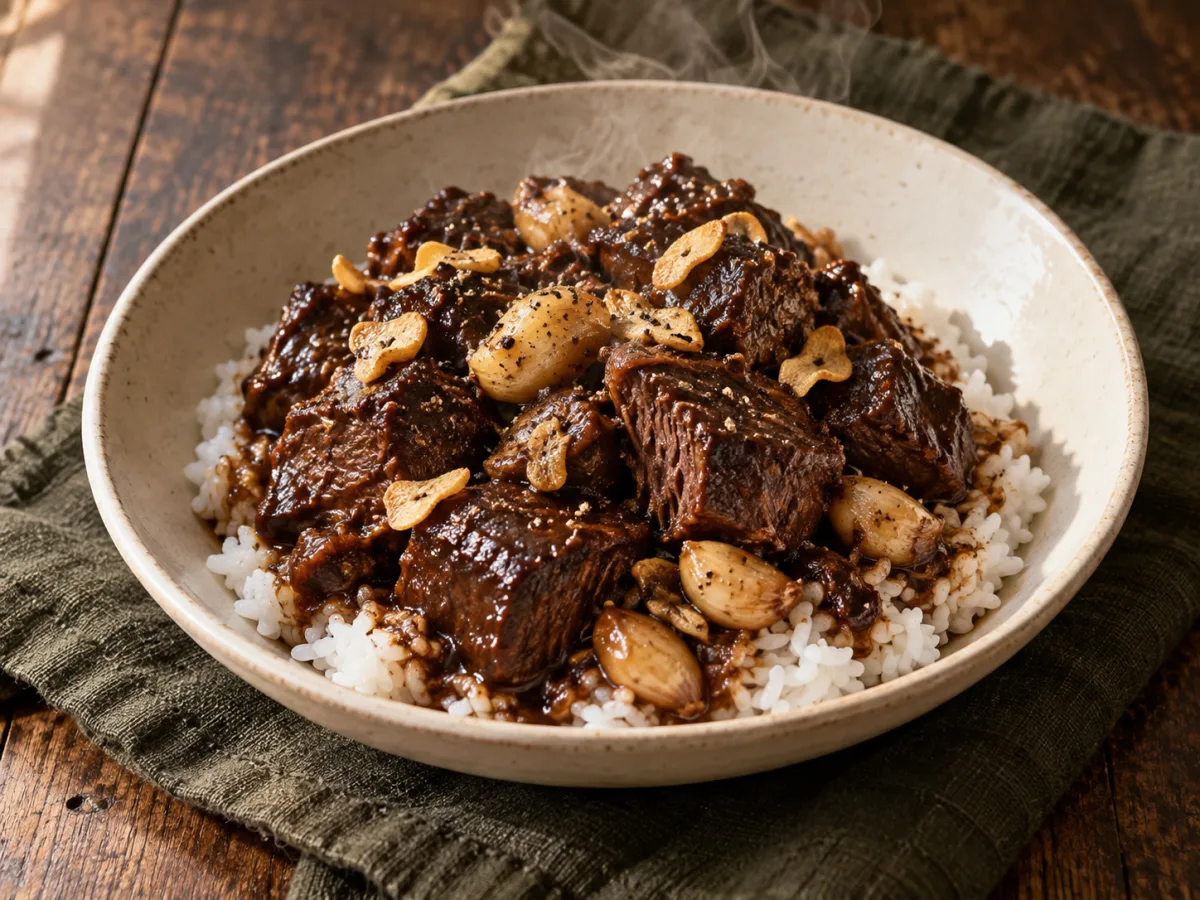
Beef Salpicao-Style Braise
Salpicao flavours — an absurd amount of garlic, Worcestershire, black pepper, and butter — as a low-smell pressure braise. Dark and glossy, no cream.
6 servings. Read PREREAD.md first for cooker operation, salt calibration, and the cooling routine.
Read this before you commit
Real salpicao is a sear dish: tender sirloin cubes hit hard in a screaming pan for about five minutes, browned outside and pink within. That technique is the dish.
A pressure cooker cannot do that. What it can do is braise a cheaper, tougher cut until tender and load it with the same garlic-Worcestershire-butter-pepper profile. It’s genuinely good and it will scratch the itch — but it’s a soft braise, not a seared steak dish. If the texture is what you’re after, that needs a hot pan and the smell that comes with it.
Ingredients
For the pressure cook
- 1 kg beef chuck (kalitiran) or shank (kenchi), cut into large cubes — have the butcher cube and trim it
- 3/4 cup water — do not increase this, see
PREREAD.md - 4 1/2 tbsp Datu Puti soy sauce
- 3 1/2 tbsp Worcestershire sauce
- 4 tsp coarsely crushed black peppercorns
- 2 whole heads of garlic (25–30 cloves), peeled but left whole
- 2–3 small red onions, quartered
To finish, off heat - 5–6 tbsp butter
- 1–2 tbsp olive oil (optional)
- A pinch of fresh crushed pepper
- 8–10 extra garlic cloves, sliced and fried in butter (optional, see below)
Method
- Liquids first. Water, soy sauce, Worcestershire, and crushed pepper into the pot. Stir once.
- Solids on top. Beef, all the garlic cloves, onions. Do not stir again.
- Lid on, valve seated. Meat/Stew, then Pressure Time to 35 minutes.
- Window cracked, fan pointing out, leave the room.
- Let pressure drop on its own — about 25–30 minutes. Never quick-release. Turn Keep Warm off.
- Reduce the sauce properly. See below — this matters more here than in any other recipe in the folder.
- Butter in, generously, off the heat or on the lowest setting. Stir until the sauce turns glossy. Add olive oil if using.
- Fresh crack of pepper, scatter the fried garlic if you made it, serve over rice or with bread.
Getting the sauce right
A loose watery sauce is the difference between “salpicao-ish” and “beef soup.” This is the one recipe here where boiling down is worth real open-pot time.
Best method: lift the beef out. Pour the liquid into a tall narrow jar, wait 5 minutes, spoon off the risen fat. Return the liquid and boil it down on Sauté until noticeably syrupy, then return the beef and stir to coat.
Reducing concentrates flavour in a way that ladling liquid out does not. Run the fan — and note that at 1 kg you have roughly twice the liquid to boil off through the same surface area, so budget more time than you’d expect. If the smell budget is tight that day, ladle most of it out and use a cornstarch slurry instead.
Do not skip the butter. Five to six tablespoons sounds absurd. It’s what makes the sauce glossy, it’s the dish’s defining character, and it’s compensating for the browning that never happened.
The fried garlic topping
Optional, and the closest you’ll get to the punch of the real thing. After the pot depressurises and the beef is out, use the Dowell on Sauté: slice 8–10 extra cloves thin and fry them in butter over low heat until pale gold — pull them before they fully brown or they turn bitter. Scatter over the finished dish.
Whole pressure-cooked cloves go sweet and mellow; fried slices stay sharp and toasty. Two different garlic characters in one dish. It costs a few minutes of pan smell, so skip it when that’s the priority.
Notes specific to this recipe
- Two whole heads of garlic is not a typo. Whole cloves never turn harsh — see
PREREAD.md. At this quantity they read as generous and sweet, not aggressive. - Go light on onion. Its sweetness suppresses the perception of black pepper, and pepper is a lead flavour here.
- No cream, no sugar, no vinegar. This one stays dark and savoury. Worcestershire already supplies a little tamarind acidity.
- Skip potatoes. Their starch clouds the glossy finish you’re working for. Useful in the pot roast, wrong here.
- When you skim the chilled fat, some of what solidified is the butter you added. Take off the beef fat and leave what butter you can distinguish.